Yoshikane Hamono Knives,Hand-Forged in Sanjo Since 1919
From fire and steel to your hand. Yoshikane Hamono makes kitchen knives with patience and balance, and every blade carries a century of Japanese craft.
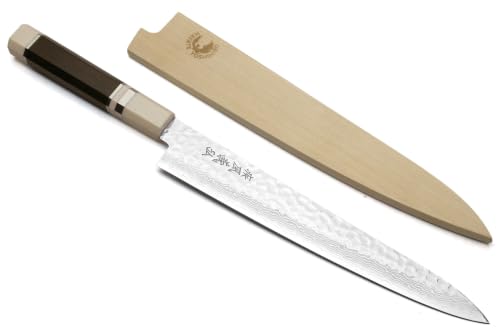
- Founded
- 1919
- Workshop
- Sanjo, Niigata
- Family
- Four generations
- Craft
- Forged and finished by hand
About Yoshikane Knives
Founded in 1919 in Sanjo, Niigata, Yoshikane Hamono is one of the most respected knife forges in Japan. For four generations the Yamamoto family has refined the old art of forging steel, with tradition first and new ideas added with care.
A Century of Japanese Blade Craft
Each knife carries the same dedication to balance, precision and lasting beauty that the forge started with in 1919.
Four Generations of Artisans
Today Master Kazuomi Yamamoto leads the Yoshikane workshop with the same discipline as his ancestors. His team forges every blade by hand, from shaping and heat treatment to the final edge polish.
Forged by Hand in Sanjo
Every blade begins as raw steel and takes shape under hundreds of hammer strikes. Forging, grinding and finishing are done by hand, following Sanjo traditions that go back centuries, so no two knives are exactly the same.
Harmony Between Form and Function
We believe a knife is more than a tool: it reflects the spirit of the person who made it. Every curve, edge and balance point is shaped for easy cutting and long life, and that pursuit still guides chefs around the world.
Japanese Knife Shapes and What Each One Does
Choose the shape first, then the steel. These are the blade profiles in our collection and the work each one is made for.
| Shape | Blade | Best For |
|---|---|---|
| GyutoChef's Knife | 180 to 240 mm | The all-rounder. A curved edge rocks through chopping, and the long tip handles fine work on meat, fish and vegetables. |
| KiritsukeSword-Tip Chef's Knife | 150 to 240 mm | Wider and straighter than a gyuto, with an angled tip. Push-cuts vegetables and slices protein with control. |
| SujihikiSlicing Knife | 240 mm | Long and narrow. Slices meat and fish in one clean stroke, so every cut keeps its texture. |
| Santoku and BunkaAll-Purpose Knife | 165 to 180 mm | Shorter blades for home kitchens. Santoku means three virtues: meat, fish and vegetables. |
| NakiriVegetable Knife | 165 mm | A flat edge meets the board along its whole length, for clean chops through vegetables. |
The Collection on Amazon
Our collection grouped by shape. Every knife below is made in Japan and listed on Amazon under the Yoshihiro name.
Chef's Knives
4 knives
Forged for cooks who value precision and balance: a chef's knife that works in any kitchen.
See Chef's Knives-
 Yoshihiro VG10 Damascus Gyuto 210 mm 16 layers, mahogany Western handle View on Amazon
-
 Yoshihiro VG10 Damascus Gyuto 210 mm 46 layers, ebony octagonal handle, saya View on Amazon
-
 Yoshihiro Kurouchi SLD Gyuto 210 mm SLD steel, Nashiji cladding, ebony handle View on Amazon
-
 Yoshihiro Gyuto and Petty Set 210 mm and 150 mm, VG10 Damascus View on Amazon
Kiritsuke Knives
4 knives
Traditional Japanese form with modern precision: a versatile blade made for control in every cut.
See Kiritsuke Knives-
 Yoshihiro VG10 Damascus Kiritsuke 210 mm 46 layers, ebony triple-ring handle, saya View on Amazon
-
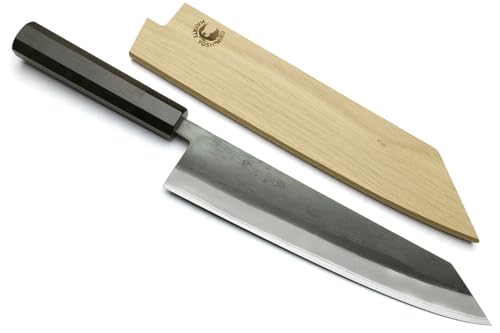 Yoshihiro Kurouchi Blue #2 Kiritsuke 210 mm Blue Steel #2 core, stainless clad, saya View on Amazon
-
 Yoshihiro Kurouchi SLD Petty-Kiritsuke 150 mm SLD steel, Nashiji cladding, saya View on Amazon
-
 Yoshihiro Kurouchi Blue #2 Petty-Kiritsuke 150 mm Blue Steel #2 core, ebony handle, saya View on Amazon
Slicing Knives
1 knife
A long, narrow blade that glides through every slice with balance and a keen edge.
See Slicing KnivesSantoku and Bunka Knives
4 knives
Handcrafted all-purpose blades for easy control and balance on meat, fish and vegetables.
See Santoku Knives-
 Yoshihiro Nashiji Ginsan Santoku 180 mm Ginsan stain-resistant carbon steel, saya View on Amazon
-
 Yoshihiro Kurouchi SLD Santoku 165 mm SLD steel, Nashiji cladding, ebony handle View on Amazon
-
 Yoshihiro Kurouchi Blue #2 Santoku 165 mm Blue Steel #2 core, stainless clad, saya View on Amazon
-
 Yoshihiro HGW Gold-Embedded Santoku 165 mm V-1 core, rust-resistant View on Amazon
Nakiri Vegetable Knives
3 knives
A flat, double-edged blade that chops straight down through vegetables without rocking.
See More Knives
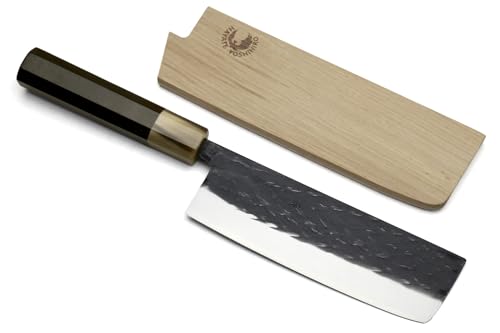

Steel and Finish: SKD12, White #2 and Nashiji
Carbon steel takes a very sharp edge and is easy to resharpen. Stainless steel resists rust better. Yoshikane forges many of its blades in SKD12 semi-stainless steel to get some of both.
-
SKD12 Semi-Stainless
A hard tool steel that holds its edge and rusts far less than plain carbon steel. Usually clad in stainless steel. Still wipe it dry after use.
-
White #2 Carbon (Shirogami)
A traditional high-carbon steel that sharpens quickly on a whetstone. It builds a patina over time and must be dried right after washing.
-
Nashiji Finish
Nashiji means pear skin. The textured surface of the cladding hides small scratches and helps food let go of the blade.
-
Tsuchime and Kurouchi
Tsuchime is a hand-hammered texture that cuts friction. Kurouchi, or black-forged, keeps the dark forge scale on the upper blade for a rustic look.
Three Pillars of Yoshikane Knives
Hand-Forged Mastery
Each blade is forged by hand in Sanjo, Japan, with techniques refined over more than 100 years. No mass production, only the blacksmith's tradition.
Balance and Precision
Yoshikane knives are made for easy control: a very sharp edge and careful weight distribution that keep every cut steady.
Timeless Aesthetic
From the Nashiji finish to natural wooden handles, every knife reflects Japanese minimalism: beauty that comes from function and tradition.
How to Care for a Japanese Knife
A hand-forged edge lasts for years when it gets a little attention after every use. Five habits are enough.
Wash by Hand and Dry at Once
Use warm water and mild soap, then dry the blade right away, sooner still after acidic food. Never put it in a dishwasher or use harsh detergents.
Cut on Wood or Rubber Boards
Avoid frozen food, bones and other hard items, and do not twist the blade inside the cut.
Touch Up the Edge
A gentle pass on a whetstone every few weeks keeps the edge keen. Honing in between stretches the time between sharpenings.
Sharpen on Water Stones Only
Use water whetstones for sharpening and honing. Pull-through sharpeners and electric grinders can chip a hard Japanese edge.
Store It Covered
Keep the knife in its wooden saya or on a knife block so the edge never knocks against other tools in a drawer.
Voices of the Kitchen
Chefs and collectors around the world trust Yoshikane Hamono for balance and precision. Each knife is tested in the heat of real kitchens and kept for a lifetime.
The best knife I've ever owned. Perfect weight, razor-sharp, and it feels alive in your hand.
Yoshikane knives redefine sharpness. It cuts through ingredients like silk. Pure precision.
After years of cooking, this knife finally made me understand what balance means.
Every detail shows care and mastery. It's not just a tool. It's a work of art.
Frequently Asked Questions
What Makes Yoshikane Hamono Knives Special?
Each knife is hand-forged in Sanjo, Japan, with traditional techniques passed down through four generations of the Yamamoto family. Every piece is made for precision and balance.
What Is the Difference Between Carbon and Stainless Steel Knives?
Carbon steel gets very sharp and is easy to resharpen, while stainless steel resists rust better. Yoshikane uses SKD12 semi-stainless steel in many blades to get the best of both.
What Is Yoshikane SKD?
SKD is short for SKD12, the semi-stainless tool steel Yoshikane forges into many of its knives, usually with a stainless cladding. It holds a sharp edge like carbon steel and rusts far less.
What Does Nashiji Mean?
Nashiji means pear skin. It is the textured finish on the cladding of many Yoshikane blades: it hides small scratches and helps food release from the knife.
How Should I Care for My Yoshikane Knife?
Always wash it by hand and dry it right after use. Avoid dishwashers, harsh detergents, and cutting frozen or hard items. Regular care keeps the blade in shape for years.
How Often Should I Sharpen the Knife?
It depends on how much you cook, but a gentle touch-up on a whetstone every few weeks keeps the edge razor-sharp. Honing between sessions stretches the time between sharpenings.
What Is the Difference Between a Gyuto and a Kiritsuke?
A gyuto has a curved edge for rocking cuts and a pointed tip. A kiritsuke is wider and straighter with an angled, sword-like tip, made for push-cutting and slicing.
Are These Knives Suitable for Professionals and Home Cooks?
Yes. Yoshikane knives are made for precision and comfort: trusted by professional chefs and balanced enough for passionate home cooks.
Where Are Yoshikane Hamono Knives Made?
All Yoshikane knives are forged and finished in Sanjo City, Niigata Prefecture, one of the oldest blacksmithing regions in Japan.
Contact Yoshikane Hamono
Questions about a knife, its steel or its care? Write to us or call the workshop in Sanjo.
株式会社吉金刃物
Yoshikane Hamono Co., Ltd.
Kaneko Shinden Hei 881-1-3 Sanjo City, Niigata Prefecture 955-0814 Japan- Phone
- 0256-33-2483
- Fax
- 0256-64-7010